Showing posts with label LATEST NEWS. Show all posts

Saturday, December 29, 2018

Store cards can feel like "a lovely big voucher"

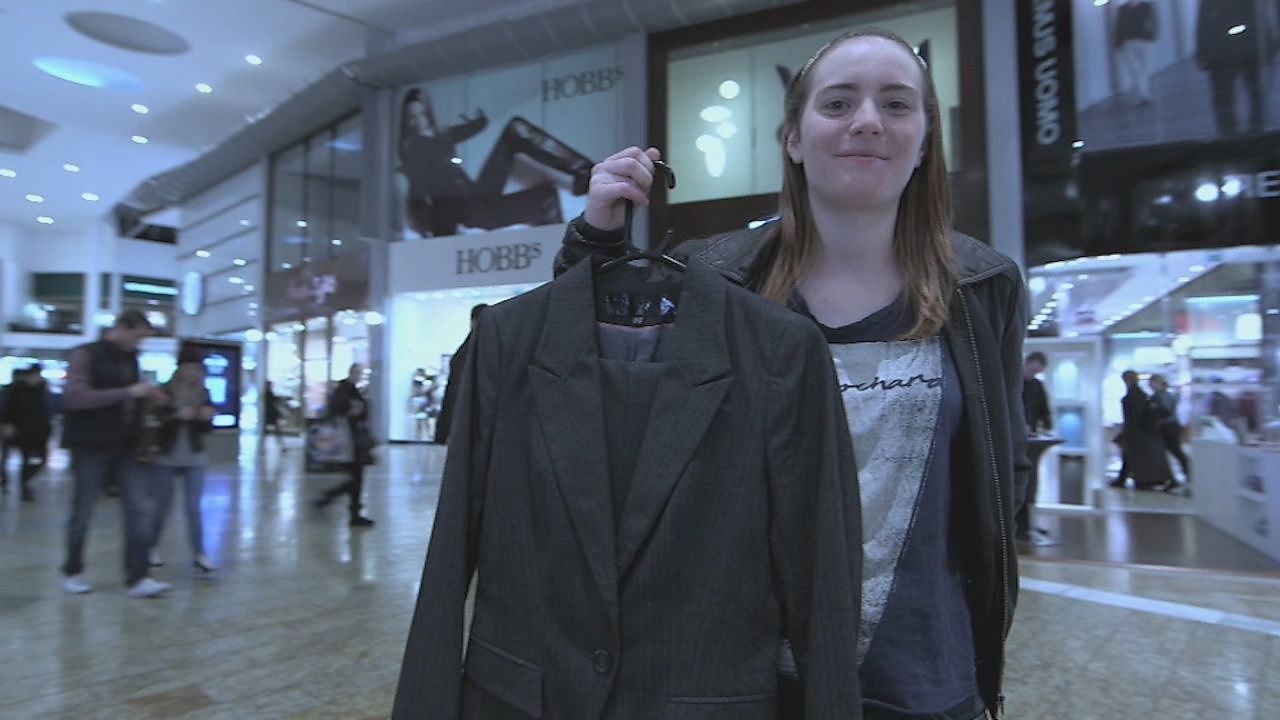
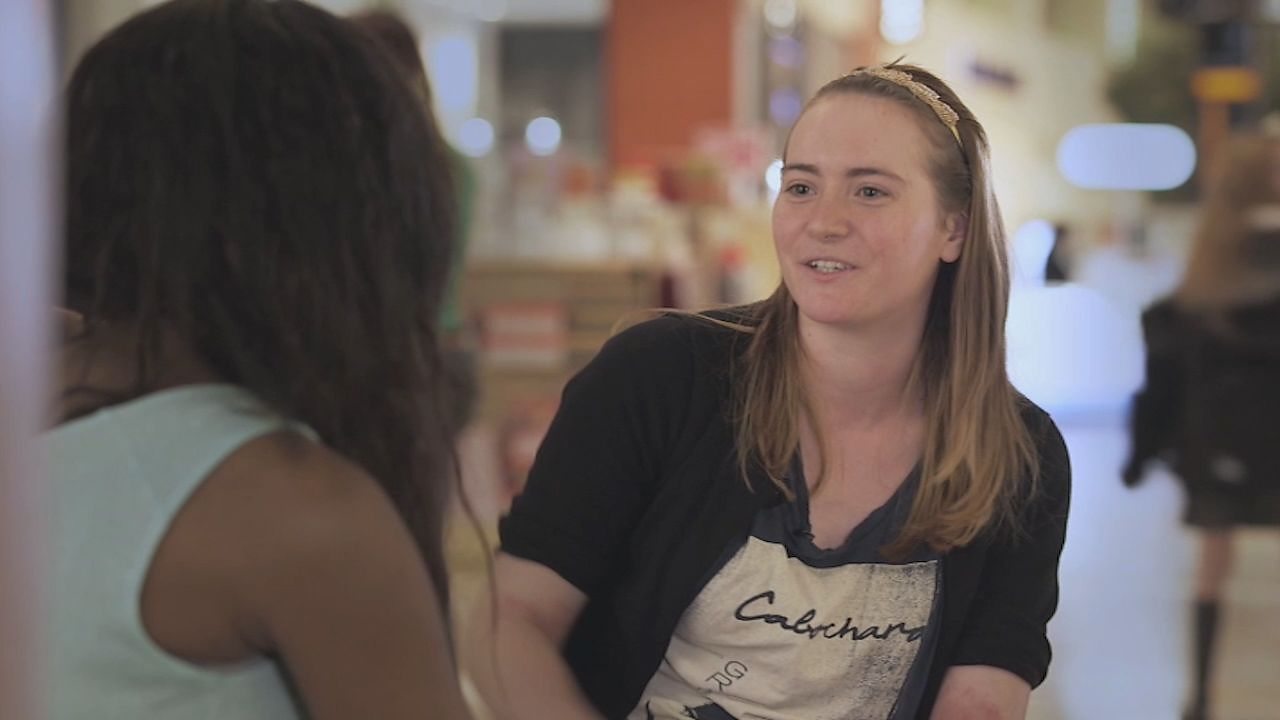
21-year-old Karen got in to a spiral of debt when she bought a suit for a job interview using a store card.
Sometimes it’s all too easy to be tempted by offers such as 'buy now, pay later,' and for many of us, it’s often the most attractive option out there when we are shopping.
But how clued up are you when it comes to borrowing money, or taking out store cards or credit cards?
Karen, who works in a café and is a keen shopper, debt problems started when she needed to buy a suit, for a job interview.
“I had 120 quid saved up," she said. "So I went up to buy it, the woman asked if I wanted a store card with it and because I didn’t have one, I thought why not!”

And so the spiral begins

"I got the suit, got the card, she did the credit check. She said you don’t need to pay for this now," Karen recalls
"I thought this is amazing, I bought loads of other stuff with the money because I didn’t have to pay for the suit there and then."
Karen did not realise how her store cards would end up costing her more in the long run, as finance expert Iona Bain explains “A store card does the same as a bank – the idea of them is to give you credit for spending instore.
"They also charge you an extra amount if you don’t pay back that amount on time.”
Karen said while she was prepared to find the money to pay back the cost of the suit she hadn't factored in interest and extra charges that might arise.
*“I knew I had to pay for the suit, but just thought at the time this is great, I could pay it off whenever," she said.
"About six weeks later I got the letter through saying you owe us £120 for the suit."
"I didn’t know what to do as I had no money in the bank."
"I took the letter put it in a drawer and forgot about it."

Temptation

Finance expert Iona Bain says offers such as these, can be really tempting to start off with,
"It can be like getting a lovely big voucher to go and spend in that shop,but actually that isn’t free money, you will have to pay it back.
"If you do fall behind on those payments you are going to have pay back, even more than you would on a credit card, on a mortgage on almost every other type of debt.”

Thursday, December 14, 2017

Air strikes on rebel prison in Sanaa ‘kill 30’

Air strikes on rebel prison in Sanaa ‘kill 30’
At least 30 people are reported to have been killed in Saudi-led coalition air strikes on a rebel military police camp in Yemen’s capital, Sanaa.
Most of the dead were said to be detainees at a prison inside the camp.
A guard said an initial attack damaged one wing of the jail, prompting some inmates to try to escape. Then another strike almost demolished the building.
The coalition backs Yemen’s government in its war against the Houthi rebel movement.
More than 8,670 people have been killed and 49,960 injured since the coalition intervened in the conflict in 2015, according to the UN.

Wednesday, August 16, 2017

Agribusiness is no longer business as usual – Professor Miko

Agribusiness is no longer business as usual – Professor Miko
Country director of Sasakawa Global 2000 Nigeria, Professor Sani Miko has stated that Agricultural business in Nigeria has recorded a lot of positive development that requires farmers to brace up and adopt the newly introduced agricultural practices that will ensure high yield and production of qualitative farm produce.

Professor Miko made this know at Kwanar Kaugama in Kaugama local government in Jigawa state while addressing rice farmers during a media tour to areas where Sasakawa projects are being implemented.

According to him, agricultural activities are no longer business as usual as a lot of new technologies that include the use of improved seeds and the adoption of the newly introduce planting methodology among other developed agricultural practices aimed at increasing productivity are now made available to farmers for adoption.

He added that, farmers should endeavour to adopt the new innovations as against the traditional methods as a measure of moving agriculture to the next level in terms of increased in food production for nation’s food sufficiency attainment adding that the new technologies have been adopted and experimented to the farmers for easy adoption.

“These are technologies that we have demonstrated to the farmers in the farms for them to see and adopt. It is pertinent to note here that most farmers have begun to adopt these technologies without much ado as they have seen the efficacy of such processes,” said Professor Miko.

A farmer in the area, Malam Rabi’u Shu’aibu stated that, based on the adopted newly introduced technology rice farmers have started seeing indication that their worries of decades will soon be a history adding that they have seen the benefit of it that is why they have no reservation in adopting it.

He further pleaded with Sasakawa not to relent in its effort in transforming Nigerian agricultural sector to the apex.

Friday, August 4, 2017

Bail of $30,000 set for UK cyber expert Marcus Hutchins


Marcus Hutchins wanted to remain anonymous after the WannaCry outbreak, but his identity was revealed

A judge in the US state of Nevada has recommended the release on $30,000 (£23,000) bail of a UK computer expert.
Prosecutors told the court that Marcus Hutchins had admitted to writing and selling malware code designed to steal banking details.
His lawyer said he denied those and all other charges against him.
Mr Hutchins 23, from Ilfracombe in Devon, came to prominence after he stalled the WannaCry cyber-attack that hit the NHS in May.
The federal judge ordered Mr Hutchins' release on bail pending his next appearance in Wisconsin on 8 August subject to a lengthy list of conditions including the surrender of his passport and monitoring by GPS.
Mr Hutchins was arrested at Las Vegas airport minutes before he was due to fly home from a week of partying in the desert city
He had been attending a cyber-security conference.
Among his fellow computer experts he is regarded as a hero for his role in stopping the so-called WannaCry virus that hit the NHS before spreading to 150 countries.

Sunday, July 23, 2017

With N1,000, Suya, visitors gain easy access to NASS

With N1,000, Suya, visitors gain easy access to NASS
National Assembly building, Abuja
With roasted meat (Suya), N1,000 or a plate of food, unaccredited persons are gaining entry into the National Assembly Complex daily, investigation by Daily Trust on Sunday, revealed. 
Our investigation revealed that while petty traders use their wares including suya, plate of food, Moimoi (steamed bean pudding)  to bribe their ways into the complex, visitors who throng there to solicit  money from the lawmakers pay N2,000 on sitting days and N1,000 on non-sitting days. 
The bribes, according to a cross section of petty traders, visitors and lawmakers, are paid to the security men attached to the various entry points of the complex. 
Daily Trust on Sunday reports that with the payment of the bribes to those who are engaged to man the entry points, including sergeant-at-arms, police and officials of the Nigeria Security and Civil Defence Corps (NSCDC), the unaccredited persons are free to do whatever they want inside the country’s lawmaking powerhouse. 
It was also gathered that some of those who gain access to the premises of Assembly are former staff who either served as aides to ex-lawmakers or support staff.
Our reporters also learnt that some female visitors, who constantly throng the National Assembly are girlfriends to some of the security personnel. 
“What is even disturbing is the fact that most of those  who come in through this method (as girlfriends) don’t have anything doing in the National Assembly,” a source said.
A food vendor told Daily Trust on Sunday that aside bribing his way into the complex with his ware, he occasionally gives recharge cards to some of the security men. 
“Twice in a month, I give Moi moi to those people manning the entrance.  Last week, I shared N2,000 worth of Moi moi to them. That has been the way. I’m happy doing it. Aside this, at intervals I give recharge cards to some of them,” the trader said. 
A former legislative aide said he frequents the National Assembly because he is yet to secure another job. 
“I came to the National Assembly during Dimeji Bankole’s era as Speaker. I was a legislative aide until my boss was defeated at the poll. Since then, I have not been doing anything. So, I come here to get money from the lawmakers. 
“Before things turned bad, I used to make between N5,000 and N10,000 from the lawmakers but now there’s no free money again. It was one of the lawmakers that advised me to go into petty trading,” he told our reporters on Thursday in the office of a South-west senator.
With his wares by his side, the 40-year-old former legislative aide said the failure of the government to provide employment to the citizenry worsened the situation. 
Lamenting the situation, a ranking senator said an executive session was held to address the situation recently. 
“Our safety is no longer guaranteed because with N2,000 on sitting days- Tuesdays, Wednesdays and Thursdays, people are allowed into the premises. On non-sitting days, Mondays and Fridays, they pay N1,000. This is why you see hundreds of people on the premises, moving from one office to the other to solicit money. 
“We are tired of this because they don’t allow us to work. All manner of people are allowed in. We are afraid Boko Haram members can be allowed in under this circumstance. They will just embarrass the nation, “he said. 
He said at the executive session, the Senate Services Committee was directed to factor into this year’s budget of the National Assembly the construction of security devices at all entry points that will allow only people with Identity Cards (ID) into the complex. 
“It was generally agreed upon that the devices be mounted to check the excesses of the security men. Even if you give bribe, you cannot gain entry if the device is mounted,” the senator who has been at the National Assembly for over a decade said.   
In March,  Senator Samuel Anyanwu (PDP, Imo) raised a point of order on the floor of the Senate, raising alarm on how “all manner of people” have access to the National Assembly, saying it could lead to breakdown of security one day.
“Mr President, it is worrisome that these days, when we close from office sometimes around 6.pm, you’ll see all manner of people littering around. You wonder how they gain access.
“The situation is really disturbing. I had to bring this matter here to avoid any security breach in the National Assembly. I think something has to be done,” he said.
A top security official blamed the situation on poor allowances being paid to security men attached to the complex by the National Assembly management. 
“The situation is so bad that even with a stick of suya, you will be allowed in. We have raised the issue on many occasions and God forbid, if anything funny happens, they will blame us,” he said. 
The senior security officer who doesn’t want to be named said officials of the Sergeant-at-arms lack the expertise to properly man the complex. 
“Junior officers are given N6,000 monthly and senior officers N10,000 as allowances by the management of the National Assembly. With this, you cannot expect them not to look for other ways to make money. Two, majority of the Sergeant-at-arms are women, old and tired. The young ones want quick money, “he said.   
When contacted, the Director of Information at the National Assembly, Mr. Ishaku A. Dibal, referred our correspondent to Deputy Clerk of the National Assembly. 
But a source close to the National Assembly management said in a matter of weeks action will begin to manifest in this regard. 
The source said:” It is expected that a place like the National Assembly is always a beehive of political, social and economic activities with no fewer than, 3,000 visitors thronging the premises to see their representatives. 
“However, it is heartwarming that management in its last retreat came up with measures that will address the influx of visitors into the the National Assembly. In a matter of weeks action will begin to manifest in this regards. 
“Moreso, the presiding officers are in agreement on the laudable efforts towards safety of all in the complex. To management, it is work in progress. All issues or challenges are being addressed. “

Saturday, July 15, 2017

Maryam Mirzakhani, first woman to win maths' Fields Medal, dies

Maryam Mirzakhani, the first woman to receive the prestigious Fields Medal for mathematics, has died in the US.
The 40-year-old Iranian, a professor at Stanford University, had breast cancer which had spread to her bones.
Nicknamed the "Nobel Prize for Mathematics", the Fields Medal is only awarded every four years to between two and four mathematicians under 40.
It was given to Prof Mirzakhani in 2014 for her work on complex geometry and dynamical systems.
Iranian President Hassan Rouhani said Prof Mirzakhani's death caused "great sorrow," state media reported.
Foreign Minister Mohammad Javad Zarif said her death was a cause for grief for all Iranians.
"A light was turned off today. It breaks my heart... gone far too soon," US-Iranian scientist Firouz Naderi posted on Instagram.
He added in a subsequent post: "A genius? Yes. But also a daughter, a mother and a wife."
Prof Mirzakhani and her husband, Czech scientist Jan Vondrak, had one daughter.
Some social media users criticised Iranian officials for not using recent images of Prof Mirzakhani which showed her uncovered hair. Iranian women must cover their hair in line with a strict interpretation of Islamic law on modesty.
Iranian official media and politicians used older pictures in their social media tributes, which show her hair covered.
Stanford University President Marc Tessier-Lavigne described Prof Mirzakhani as "a brilliant mathematical theorist and also a humble person who accepted honours only with the hope that it might encourage others to follow her path".
"Maryam is gone far too soon but her impact will live on for the thousands of women she inspired to pursue math and science," he said.
"Her contributions as both a scholar and a role model are significant and enduring and she will be dearly missed here at Stanford and around the world."
Born in 1977, Prof Mirzakhani was brought up in post-revolutionary Iran and won two gold medals in the International Mathematical Olympiad as a teenager.
She earned a PhD at Harvard University in 2004, and later worked at Princeton before securing a professorship at Stanford in 2008.
Strange matter wins physics Nobel
John Nash's ground-breaking ideas in maths
What exactly is 'game theory'?
Her receipt of the Fields Medal three years ago ended a long wait for women in the mathematics community for the prize, first established in 1936.
Prof Mirzakhani was also the first Iranian to receive it.
The citation said she had made "striking and highly original contributions to geometry and dynamical systems" and that her most recent work constituted "a major advance".
Prof Dame Frances Kirwan, a member of the medal selection committee from the University of Oxford, said at the time: "I hope that this award will inspire lots more girls and young women, in this country and around the world, to believe in their own abilities and aim to be the Fields Medallists of the future."

Turkey coup anniversary: Emotional Erdogan hails 'defenders of nation'

Turkish President Recep Tayyip Erdogan has delivered an emotional address to tens of thousands of people in Istanbul on the anniversary of a failed coup.
Mr Erdogan said: "People that night did not have guns, they had a flag and more importantly, they had their faith."
He backed the death penalty for coup plotters and said they should wear Guantanamo Bay-style uniforms.
Some 250 people died and 2,196 were wounded fighting the coup attempt by an army faction on 15 July last year.
The government has since dismissed more than 150,000 state employees, saying it is rooting out coup supporters.
Critics say the dismissals, and a wave of 50,000 arrests, are part of an attempt to purge dissent.
The human impact of Turkey's purges
The officers who cannot go home
Mr Erdogan was addressing tens of thousands of Turks who had rallied to the bridge over the Bosphorus where civilians had confronted pro-coup soldiers last year.
He said: "I am grateful to all members of my nation who defended their country."
Mr Erdogan said that 250 people had lost their lives but the country had won its future.
"Putschists who closed off the bridge on that night wanted to show the world that they were in control," he said, but were countered by "millions who took to the streets that night to defend the honour of their nation".
He said he would "break the heads of the traitors" who plotted the coup.
Mr Erdogan also said he had spoken to Prime Minister Binali Yildirim about the coup plotters, saying: "When they appear in court, let's make them appear in uniform suits like in Guantanamo."
The president then unveiled a "martyrs' memorial" at the bridge, which has been renamed the Bridge of the Martyrs of July 15.
He is now returning to Ankara to address parliament after midnight (21:00 GMT), at the exact time last year it was attacked by coup plotters.
The president will end proceedings by unveiling a monument to the coup's victims at his palace in the capital at dawn.
The date of 15 July has been declared an annual holiday.
Earlier Mr Yildirim told a special session of parliament that 15 July 2016 was a "second War of Independence", following the conflict that led to the creation of the modern state in the 1920s.
"It has been exactly one year since Turkey's darkest and longest night was transformed into a bright day, since an enemy occupation turned into the people's legend," Mr Yildirim said.
However, Kemal Kilicdaroglu, the head of the main opposition Republican People's Party, condemned the government's actions since the coup.
He said: "This parliament, which withstood bombs, has been rendered obsolete and its authority removed. In the past year, justice has been destroyed. Instead of rapid normalisation, a permanent state of emergency has been implemented."
Turkey's trauma after night of the tanks
On 15 July last year, the coup plotters, armed with tanks, warplanes and helicopters, declared that they had taken over on state media, and bombed parliament and other key locations.
They tried to detain Mr Erdogan as he holidayed in an Aegean resort, but he had left and the coup was thwarted by civilians and soldiers loyal to the president.
The Turkish authorities accused a movement loyal to the Muslim cleric, Fethullah Gulen, of organising the plot.
Mr Gulen, who remains in the United States, denies any involvement.
Washington has so far resisted calls from the Turkish authorities to extradite him.
The BBC's Turkey correspondent, Mark Lowen, says that, a year on, the unity against the coup has faded, and divisions over the rule of law have widened. For half of the country, he says, 15 July was its rebirth; for the other half, its aftermath is killing off what was left of Turkish democracy.
Critics say Mr Erdogan is using the purges to stifle political dissent, and last week hundreds of thousands of people gathered in Istanbul at the end of a 450km (280-mile) "justice" march against the government.
The president accused the marchers of supporting terrorism.
On Friday, the government continued its dismissal of state employees, sacking another 7,395 for alleged links to what it calls terrorist groups.

Tuesday, July 11, 2017

Tech firms unite for 'net neutrality' protest

A host of internet giants - from social networks to dating apps to porn sites - will join a protest Wednesday against plans to roll back rules protecting "net neutrality".
The sites will display a variety of messages, or simulate the potential effects of losing the basic principle of all internet traffic being treated equally.
The US communications regulator earlier this year voted to remove an Obama-era rule that would prevent the prioritisation - or "throttling" - of data, as well as other measures campaigners consider to be detrimental to the internet.
Opponents to net neutrality say it stifles innovation and discourages investment in telecoms infrastructure.
Among the companies protesting, the headliners include Google, Facebook, Amazon, Reddit, AirBnB, Twitter and Snapchat.
Crowdfunding site Kickstarter will be involved, as will craft-selling site Etsy and dating app OkCupid. PornHub, one of the world's most visited sites, will also be taking part.
"Internet service providers could create special fast lanes for content providers willing to pay more," said Corey Price, vice president of PornHub.
"That means slow streaming, which, especially in regards to online porn, is quite problematic as you can imagine."
Campaigners told the BBC around 80,000 websites and services in all are taking part in the co-ordinated action that is designed to draw attention to a public consultation about the proposed rule reversal.
"What we want the FCC to hear, and we want members of Congress to hear, is that net neutrality is wildly popular, which it is, and we want them to stop trying to murder it," said Sean Vitka, a lawyer for pro-net neutrality groups Demand Progress and Fight for the Future.
"It stops large companies, like internet service providers, from controlling who wins or loses on the internet. There'd be nothing to stop your ISP stopping the next Facebook, the next Google, from accessing customer's equally.
"If a new company can't access companies on the same terms as the incumbent's they're not going to have the chance to thrive."
This kind of protest technique has been effective in the past.
When numerous firms went "dark" in opposition to the Stop Online Piracy Act, which they argued was a threat to free speech, it led to the bill being withdrawn.
But protest groups face a tougher battle in convincing the Republican-controlled FCC headed by new commissioner Ajit Pai.
Earlier this year the department described President Obama's rule as risking "online investment and innovation, threatening the very open internet it purported to preserve".
It added: "Requiring ISPs to divert resources to comply with unnecessary and broad new regulatory requirements threatens to take away from their ability to make investments that benefit consumers."
Promoting investment in infrastructure is the strongest of the anti-net neutrality arguments, with major telecoms companies arguing that the Googles and Facebooks of the world would not be able to run were it not for the high-speed internet connections offered by internet service providers.
Campaigners have countered this by suggesting it is the lure of enticing premium services like Netflix that tempt users into paying more for better internet access.
AT&T role
A more curious position came from mobile carrier AT&T which said it was supporting the protest - despite in the past being a vocal opponent of net neutrality.
"We agree that no company should be allowed to block content or throttle the download speeds of content in a discriminatory manner," the firm said.
"So, we are joining this effort because it's consistent with AT&T's proud history of championing our customers' right to an open internet and access to the internet content, applications, and devices of their choosing."
Campaign groups gave the company little credit, pointing out that it has sought to put in place data prioritisation, which would allow web companies to pay AT&T in order to get priority - i.e. quicker - access to their users.
"AT&T are lying when they say they support net neutrality, while actively opposing it," said Evan Greer, director of Fight for the Future, in an interview with tech news site Ars Technica.

Thursday, July 6, 2017

PR firm Bell Pottinger apologises over S Africa campaign

Public relations firm Bell Pottinger has apologised for its role in a media campaign in South Africa that critics say was inflaming racial tensions.
The UK-based company sacked one employee and suspended another three, admitting the campaign was "offensive".
Critics say it sought to stoke racial tensions by focusing on the dominant role of white-owned businesses.
They claim it is part of a larger initiative to distract attention from allegations of massive corruption.
Claims of undue influence have been made against South African President Jacob Zuma, the wealthy Guptas family and their political allies.
Mr Zuma and the Guptas have consistently denied all the allegations.
'White monopoly capital'
In a statement on Thursday, Bell Pottinger Chief Executive James Henderson said: "We wish to issue a full, unequivocal and absolute apology to anyone impacted.
"These activities should never have been undertaken. We are deeply sorry that this happened."
Bell Pottinger said it had ended its contract with Oakbay, a company owned by the Guptas, three months ago.
The PR firm also said it had asked an independent law firm to review "the account and the work done on it".
Although that investigation was still continuing, Bell Pottinger said it had "already been shown interim evidence which has dismayed us".
Company critics in South Africa and media outlets had for some time accused the PR firm of presenting opponents of President Zuma and the Guptas as agents of a "white monopoly capital" during a sustained campaign.
Pressure on Bell Pottinger increased recently after local media had leaked emails allegedly showing its employees working with Guptas' representatives on a campaign focusing on "economic apartheid".
The authenticity of the emails has not been independently verified.
Separately, Bell Pottinger was recently reported to a professional body for Britain's PR industy.
The Democratic Alliance, South Africa's main opposition party, accused the PR company of unethical behaviour.

Sunday, July 2, 2017

Avignon shooting: Eight injured near French mosque


Eight people have been injured in a shooting outside a mosque in southern France, officials have confirmed.
Worshippers leaving the Arrahma mosque in Avignon were approached by two hooded suspects at about 22:30 local time (21:30 GMT) on Sunday.
The suspects, carrying a handgun and a shotgun, arrived in a Renault Clio before opening fire on the crowd, La Provence newspaper reports .
Police said they were not treating the incident as a terrorist attack.
Four people were wounded outside the mosque and a family of four - including a seven-year-old girl - also suffered injuries from shrapnel while in their apartment, located some 50 metres away, La Provence said, citing a source.
Two of the eight wounded were hospitalised, according to the source, who also said that worshippers leaving the mosque had not been the intended target.
The Avignon attack is not being treated as a terrorist incident, the prosecutor's office said. Laure Chabaud, a district magistrate, said that the incident was likely to be the result of a dispute between youths.
On Thursday, a man was arrested after trying to drive a car into a crowd in front of a mosque in the Paris suburb of Creteil. No-one was injured in the incident.
France remains on alert amid heightened security following a deadly attack on Paris police in April and a series of terrorist incidents in recent years.

Saturday, June 10, 2017

London attack: Men 'planned to use 7.5 tonne lorry'

The London Bridge attackers tried to hire a seven-and-a-half tonne lorry to carry out their attack, police say.
But the three men failed to provide payment details and the vehicle was not picked up, prompting them to use a smaller van from a DIY store instead.
The men drove into pedestrians on the bridge before stabbing people in Borough Market seven days ago.
Police said the men tied 12in (30cm) pink ceramic knives to their wrists and had petrol bombs in the van.
Eight people were killed and dozens more were injured in the attack, which began shortly before 22:00 BST on 3 June.
Khuram Shazad Butt, Rachid Redouane and Youssef Zaghba have been named as the attackers, who were all shot dead.
Two arrests
Scotland Yard wants more witnesses to come forward and is also appealing to companies who hire out vans to report any suspicious activity.
Early on Saturday, police said they had arrested a man, 27, on suspicion of preparing terrorists acts, after carrying out a raid in Ilford, east London, linked to the attack.
At 02:05 BST, police also arrested another man, 28, at a residential address in Barking, also on suspicion of preparing terrorists acts.
In its most detailed description of the attack yet, the Metropolitan Police said the men had also rented a flat in Barking, east London, to use as a safe house.
Who were the attackers?
The victims of the attack
What we know so far
Inside, they found a copy of the Koran opened at a page describing martyrdom.
They also discovered equipment for making petrol bombs, plastic bottles and duct tape for constructing fake suicide bomb belts, and an ID card for Redouane.
Forensic work at this flat has determined that they acted alone.
The investigation has concluded that 27-year-old Butt was the ringleader. He hired the van used in the attack from a B&Q store in Romford on the morning of the attack.
He is thought to have driven the van, with Redouane and Zaghba in the back, into central London.
At two minutes before 22:00 BST, the van crossed London Bridge heading south. Six minutes later it returned, crossing over the bridge again and making a U-turn at the northern end.
The attack began with the van driving back along the pavements of the bridge, running down pedestrians, three of whom died, before crashing outside the Barrowboy and Banker pub opposite London Bridge station.
The men jumped out clutching the ceramic kitchen knives. Police say the weapons were possibly chosen to prevent them being picked up by metal detectors.
They stabbed people who had been enjoying the area's pubs and restaurants, killing five.
Police were called within two minutes and arrived eight minutes later, killing the attackers in what officers said was an "unprecedented" volley of 46 bullets.
When briefing reporters, Commander Dean Haydon said the police - from the Met and City of London forces - had shown "incredible bravery".
He added: "We have stories of people armed with chairs, bottles, anything they could get their hands on with a view to trying to prevent the attackers coming to pubs and bars but also scaring them off to prevent other people being attacked."
He detailed the actions of four people who put their lives at risk to fight back and help the injured:
A doctor at a restaurant heard screaming and "with no regard for his own safety" ran outside to pick up an injured man and carry him across the bridge
A public relations consultant heard the van crashing and gave first aid to a man who'd been stabbed - despite the danger
A restaurant worker tried to fight off an attacker who came in and stabbed a young woman in the back
An off-duty police officer was stabbed in the stomach as he tried to disarm one of the attackers
The massive police investigation into the attack continues and by Saturday there had been 20 arrests and 13 buildings had been searched.
So far, 282 witnesses from 19 countries have been questioned but police still want more people who saw what happened to come forward.
In the back of the white Renault van used in the attack officers found wine bottles filled with a flammable liquid with rags tied to their necks. There were blow torches for lighting these "Molotov cocktails".
The three men had added bags of building gravel and several chairs - possibly to suggest a reason for having hired the van.
Scotland Yard said it wanted to hear from anyone renting vans who might have suspicions about a customer.
Police are also appealing for information about the "distinctive" pink "Ernesto" brand knives the men were carrying.
They said they had not found evidence of anyone else being involved in the plot - or inspiring the attackers to carry it out.
The Met revealed Butt had been arrested for bank fraud in October 2016 but was not charged. He had been opening accounts and closing them again, possibly to launder money.
Police also confirmed there had been a call about him to an anti-terrorism hotline, but no evidence was given that he was planning an attack.
However when he appeared in a Channel 4 documentary, The Jihadis Next Door, last year, officers did view the programme. They decided it was "deeply abhorrent" but not evidence of criminality.
Mr Haydon described the current terror alert as "unprecedented times". Since March, there have been five planned attacks of which two were prevented and three carried out - in Westminster, Manchester and London Bridge.
What happened in the Manchester attack?
Westminster attack: What we know so far
"The tempo has increased," he said, adding that officers at Britain's intelligence services were "working flat out".
"Hostile Vehicle Mitigation Barriers" have been
added to central London bridges to prevent vehicles being driven onto the pavement.
Meanwhile, police are working with "iconic venues" and music festivals to improve their security over the summer.

Friday, June 9, 2017

NYSC member divorces husband, refunds N80,000 dowry

Rukayat, a resident of Jos, had approached the court seeking the dissolution of the marriage on the grounds that she was no more in love with Alkasim.
A Jos Upper Area Court on Thursday dissolved the marriage between 27-year-old Rukayat Ahmed, an NYSC member, and Alkasim Ahmed, following a petition filed by the former.
Rukayat, a resident of Jos, had approached the court seeking the dissolution of the marriage on the grounds that she was no more in love with Alkasim.
The woman, who filed a direct complaint to the court, argued that such separation was permissible in Islamic law, “if the partners are no more in love and therefore unwilling to live together”.
When the case was mentioned on May 25, the husband did not object to Rukayat’s demand.
At the resumption of hearing on the matter on Thursday, the Judge, Yahaya Ahmed, endorsed the separation of the couple and ordered the petitioner to refund the N80,000 paid as dowry by her husband, as applicable in Islamic law.
Rukayat promptly paid the money and walked away a free woman. (NAN)

Wednesday, June 7, 2017

Iran attacks: 'IS' hits parliament and Khomeini mausoleum


Twin attacks on the Iranian parliament and Ayatollah Khomeini's mausoleum in the capital, Tehran, have killed at least 12 people and injured many more.
After hours of intermittent gunfire, officials said both incidents were over and the attackers were dead.
The Islamic State (IS) group has said it carried out the attacks, which would be a first in Iran.
Iran's powerful Revolutionary Guards accused Saudi Arabia and the US of being behind the attacks.
"This terrorist action, coming one week after the meeting of the president of the United States with the leader of the one of the region's reactionary governments (Saudi Arabia)... shows they are involved in this savage action," it said in a statement.
The US state department condemned the attack, saying "the depravity of terrorism has no place in a peaceful civilised world".
President Hassan Rouhani said Iran's message was that "terrorism is a global problem", and he called for "regional and international co-operation and unity".
Iran's Supreme Leader Ayatollah Ali Khamenei said the attacks would have "no effect" on the country.
In a statement, IS warned of further attacks against Iran's Shia Muslim majority.
How did the attacks unfold?
Gunmen armed with Kalashnikovs entered the parliament on Wednesday morning. Images from the scene showed a major security operation as forces surrounded the building.
Iran attacks will boost flagging IS morale
#PrayforTehran: Solidarity after attacks
Heavy gunfire could be heard.
Iranian authorities denied that there had been a hostage situation inside the parliament building.
Reports said the gunmen had entered parliament via a public entrance, dressed as women.
Security forces surrounded the parliament, and TV footage showed people, including children, escaping from windows.
Iranian media later reported that four attackers inside the parliament building had been killed by security forces.
At the mausoleum in southern Tehran, which is dedicated to the Islamic Republic's founder Ayatollah Khomeini, attackers began their assault by opening fire.
The governor of Tehran said one attacker there had detonated a suicide vest and another had been killed by security forces, state broadcaster Irib reports.
Iran attacks: As it happened
Images from the scene showed grenades and magazines for automatic weapons, apparently recovered from the body of an attacker.
The suicide attacker was a woman, reports suggested.
It is not clear whether the death toll of 12 includes the attackers, or whether the victims were killed at both incidents or solely at the parliament.
About 40 people were injured in the two attacks, according to emergency services chief Pir Hossein Kolivand.
Iranian officials say they managed to foil a third attack.
What kind of presence does IS have in Iran?
IS said it had carried out the attack and later posted a video which showed what it claimed was footage from inside the parliament building.
A voice is heard saying, in Arabic: "We're not going anywhere. We're staying forever."
An Iranian MP later confirmed that the video showed his office and one of his employees lying dead.
BBC Persian's Jenny Norton says that despite Iran's active involvement in fighting IS in both Iraq and Syria, the Sunni group has not until now carried out any attacks inside Iran, and appears to have little support in this predominantly Shia country.
However, our analyst says, in recent months the group has stepped up its Farsi-language propaganda efforts - targeting Iran's restive Sunni minority.
An IS documentary-style video in March featured militants who were introduced as Iranian fighters in IS ranks based in Iraq.
Speaking in Farsi, they denounced the Iranian government and the religious establishment, including the country's spiritual leader Ayatollah Ali Khamenei.
Iranian intelligence agencies claim to have foiled a number of IS-inspired plots.
But by mounting a successful attack, IS could claim a major coup against a traditional foe that other Sunni jihadist groups, including its rival al-Qaeda, have failed to target in the past.
What has been the reaction both inside Iran and abroad?
This is the most serious terrorist violence in Tehran since the turbulent early years after the 1979 Islamic Revolution.
It will come as a huge shock to ordinary Iranians, who have got used to living in a country which is generally far more stable and safe than most of its neighbours, our analyst says.
Parliament Speaker Ali Larijani downplayed the events, describing them as a "minor issue".
However, officials announced a nationwide state of emergency in response to the attacks.
Later, the Revolutionary Guards said the fact that IS had claimed the attacks "proved" that Saudi Arabia was behind them.
"This terrorist attack happened only a week after the meeting between the US President [Donald Trump] and the [Saudi] backward leaders who support terrorists," a statement said.
Iran's ally Russia condemned the attacks.
"The continuation of a series of terror attacks again underlines the need for co-ordinated actions in the fight against terror and IS," Kremlin spokesman Dmitry Peskov said.
France also condemned the attacks, but some Western countries have appeared slow to react.
What is the likely effect of the attacks?
Middle East analyst Dina Esfandiary says one possible consequence will be increased calls by hardliners for tougher action against IS in Iraq and Syria.
Public support for action in Iraq is likely to grow, as it did when IS took swathes of territory in the country in 2014.
But Iran's involvement in Syria is not popular, our analyst says - it is seen as having few benefits and costing too many Iranian lives.
The attacks will also boost the popularity of the Revolutionary Guards, seen as protectors of the nation.

Tuesday, June 6, 2017

PM accused of 'subservience' to Trump over climate move

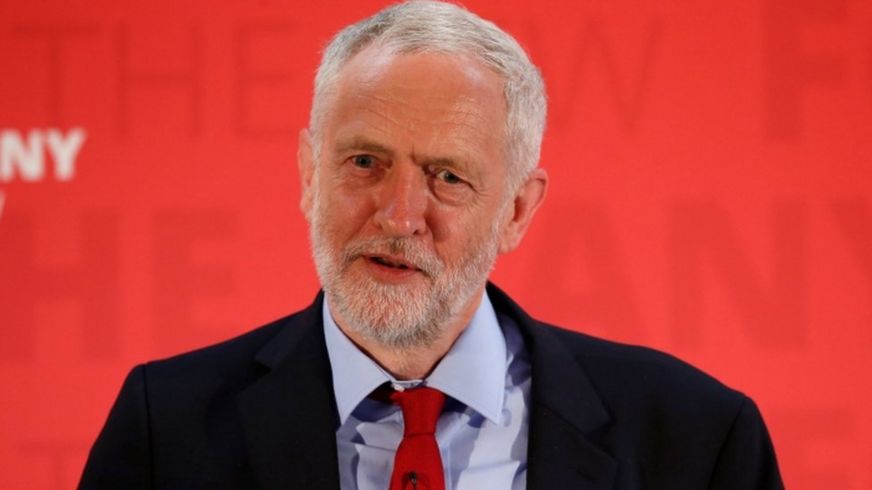
Jeremy Corbyn
Jeremy Corbyn has accused Theresa May of "subservience" to US president Donald Trump by failing to join fellow European leaders in pledging to keep up the fight on climate change.
Mr Trump's decision to withdraw the US from the 2015 Paris climate agreement has prompted international dismay.
The PM said she had made the UK's commitment to it "very clear" to him.
But Mr Corbyn criticised Mrs May for not signing a joint condemnation from France, Germany and Italy.
Mr Trump said he would try to renegotiate a new, "fairer" climate deal.
However, in a statement, French President Emmanuel Macron, German Chancellor Angela Merkel and Italy's Prime Minister Paolo Gentiloni warned the US president that the Paris Agreement could not be renegotiated.
They said they remained committed to the "irreversible" accord and regarded it as "a cornerstone in the co-operation between our countries, for effectively and timely tackling climate change".
Downing Street said President Trump called Mrs May to discuss his decision to pull the US out of the Paris Agreement.
She said: "I made the UK's position clear to President Trump last week at the G7 meeting as did the other G7 leaders and I made the UK's position clear to President Trump last night.
"Canada and Japan have not signed that letter. Neither has the UK but we all have the same view that we remain committed to the Paris Agreement."

Analysis by BBC assistant political editor Norman Smith

Downing Street have sought to brush aside the criticism of Theresa May's failure to sign the protest letter from other EU leaders.
They say it was drawn up before Mrs May had been able to speak to the president and she wanted to hear his views first before deciding on her position.
They also insist that when she did speak with Mr Trump, Mrs May was "very, very clear" with the president that she opposed his decision and expressed her support for the Paris deal.
It is also pointed out that other G7 countries - Japan and Canada - also declined to sign the letter.
Nevertheless her refusal risks reinforcing the view that Mrs May is deeply reluctant to criticise the president.
In part because of the need for new alliances after Brexit; in part because of the desire for a trade deal with the USA.
Critics fear it is a stance which will only harden EU hostility to Britain and make reaching a Brexit deal even harder.

Mr Corbyn labelled Mr Trump's move to withdraw from the accord as "reckless and dangerous" - and he accused Mrs May of a failure of leadership in not signing up to the statement.
At an election campaign event in York, he said: "Given the chance to present a united front from our international partners she [Mrs May] has instead opted for silence and once again subservience to Donald Trump.
"It's a dereliction of both her duty to this country and our duty to our planet.
"This is not the type of leadership Britain needs either to negotiate Brexit or stand up to defend our planet in an era of climate change."
Media captionPresident Trump says the Paris climate accord "disadvantages" US
Defending the government's decision not to sign the declaration, Chief Treasury Secretary David Gauke said on BBC Newsnight: "Different countries will take different approaches in how we choose to express our opinion."
But Lib Dem leader Tim Farron said the prime minister should use whatever influence she has over the US president to prompt him to reverse his decision.
"You have gone to Washington to hold Donald Trump's hand - now is the time to hold his feet to the fire," he said.
Scottish First Minister Nicola Sturgeon, who described Mr Trump's move as "profoundly regrettable", said it was an "appalling abdication of leadership by the PM" not to join her French, German and Italian counterparts in signing the joint declaration.
Green party co-leader Caroline Lucas said Mrs May's "slow and timid" response to the US announcement was another sign of her weakness.
"Once again we're seeing a weak prime minister failing to stand up tall on the world stage in the face of near-criminal behaviour from one of our closest allies," she said.
The Paris agreement commits the US and 187 other countries to keeping global temperatures rises "well below" 2C (3.6F) and "endeavour to limit" them even more, to 1.5C.
Only Syria and Nicaragua did not sign up to the deal.

Friday, June 2, 2017

Why kidnappers target schools

Two weeks ago, kidnappers stormed the Lagos Model College, Igbonla, Epe, Lagos State, where they kidnapped six students. The incident is the second such attack on the school within a year. Daily Trust reports the harrowing situation in the riverine community, and peers into possibilities why kidnappers target schools.
n Parents of Igbonla waiting to pick their children/wards after news of the incident was announced
(0 Likes)
Parents, experts blame poor security
Igbonla, in the Yoruba language, literally translates to not just a big forest that boasts wild game and demons, it is one with intimidating qualities. A developing community in Epe, an old town in Lagos State, may have in the distant past been such a forest, but today it is simply an agrarian setting, innocent and unintimidating.
Igbonla is actually about 20 minutes drive from the Epe metropolis. It is surrounded by other communities like Ilara, Ibonwon and Iji. It is just like any other rural community in Epe, but is distinguished by the presence of a college, which runs a full-time boarding system with thousands of students enrolled in its junior and senior secondary schools. A drive towards the community from the Ibonwon junction, with borders of thick forest, allows a suggestion that Igbonla, indeed, has a history of intimidating credentials.
But today, rather than be intimidating, it is Igbonla that is being intimidated. Twice within one year, kidnappers had stormed the Lagos Model College, the only landmark that announces the community as a centre for educational tourism. Penultimate Thursday, May 25, 2017 when the kidnappers came calling again, they made away with six students. Till yesterday, their victims were still in their custody as the kidnappers continue to engage the students’ individual parents in discussions on ransom.
The second kidnap incident has thrown the community into chaos. The exodus of students of the school being dragged home by their parents, Daily Trust observed Thursday, aptly illustrates the disorder Igbonla is suffering.
The arrest on Wednesday in Benin, Edo State, of three of the kidnappers who abducted the students has done nothing to calm nerves in the community. The police may have succeeded in nabbing Egelu Endurance, alias Jubby, 25; Stanley Yomi Irabomini, 25 and Bentel Endurance, 24, all of whom the police said had confessed to being part of the ruthless gang of kidnappers that abducted the students, but the more important freedom of the girls remains a worry. By yesterday, there was still no news of the release of any of the abductees.
The kidnap of the students - Yusuf Farouk, Ramon Isiaka, Pelumi Philips, Peter Jonas, Adebanjo George and Judah Agbaosim - has deepened the apprehension that has been the lot of the school authorities and the people of the town in general since gunmen first stormed the school in October 2016 and took away two teachers and four students. They later demanded the sum of N20 million per head as ransom before they would release their victims, which they did after collecting the ransom, the exact sum which was not disclosed.
When Daily Trust visited the community during the week, students were yet to resume after the incident, and it was not clear they would resume any moment soon. About five policemen have been stationed at the school since the incident, while another patrol vehicle belonging to men of the Rapid Response Squad could be seen within the school.
The private security man at the gate prevented access into the premises, insisting there was an order from above not to allow anyone in. But a peep inside showed that there was no student in the premises, while only few teachers were around. “You can see the students have vacated the school since the incident happened, so what else are you looking for?” the security man snapped.
The community is suffering from the aftermath. Business transactions are dwindling, while some residents have been relocating to safer places for fear of the unknown. A neighbouring community, Iji, through whose waterway the kidnappers accessed the school, is said to be completely deserted. Residents of Igbonla and the neighbouring communities are crying to the federal and state governments to provide adequate security at the school to prevent a recurrence of the incident.
Mr. Wakilu Shuaib, a fisherman who resides in the community, is angry that all levels of government “have failed to act after the first incident” and maintained that political leaders and the security agencies seemed to be waiting until another kidnap happens in the school.
Shuaib said, “I am a fisherman but since the incident happened, I can no longer go to the river to work. Those women who produce gari cannot also go to their farms. We are not happy with what has happened to us. This is just a small community, yet we are being reduced in number everyday because of these attacks.
“You can take a walk around this community; you can count the number of houses in the village. This school is our pride, it is the only thing that gives us visibility. If not for this school, nobody would have known about this community. But it is so shameful and sad that this thing is happening to us. It is our hope and prayers that these students are returned safely because whatever happens to this school indirectly happens to us. Already, many people have been forced to leave this community for fear, as we don’t know when another attack will happen.”
As the fisherman said, the location of the school at Igbonla has been the community’s pride and has thrown it up into public consciousness. Unfortunately, it has also seemingly become Igbonla’s albatross. So what is the special attraction for kidnappers in the model college?
Shuaib said, “Even here, we wonder what can be the special attraction for kidnappers to this school. But some of us believe it is because they think many of the parents of the students here are rich and they can easily get huge ransom from them. We didn’t know how much they collected from parents the last time they came, so maybe that encouraged them.”
He appealed, “We need soldiers and naval men here to support the policemen. We need to have more security officers around to keep surveillance on the school and, by extension, the community. “I remember when the first incident happened, we thought they were Boko Haram people that came around and there was confusion in the community. Other students also scampered out of the premises and I am among the people that rescued them from the gully. I am imagining the trauma those kids would have gone through. Our appeal is for government to find a lasting solution to these frequent attacks by these so-called militants.”
Another resident of the community who identified herself as Mrs. Iyabo Olawale tasked the management of the school to improve the security of the school in order to protect the students. Mrs Olawale said, “Government should raise the school fence and probably install CCTV cameras that would signal security agents anytime these people are coming. This attack was similar to the first one. They came in through the water and left through the same riverside.”
Asked how the community reacted when they heard about the incident, she said, “We heard many gunshots in the early hours of Thursday and we thought the shots were fired by security agents who were patrolling the community. It was when we woke up that we got the news that some students had been kidnapped. We were taken aback because we never expected that this thing would happen again after the first incident.”
Parents of the kidnapped pupils have also been taking a swipe on the school authorities and government over what they called the authorities’ insensitivity to their plight. The parents, who met at Epe last Sunday to deliberate on the incident, confirmed that the kidnappers had established contact with them demanding N400m ransom.
But contrary to what Shuaib believed was the reason the kidnappers have made the school their target, the parents disclosed that the kidnappers made it clear to them that their grievances were against the government and the school authorities. But why the school authorities? The parents said the kidnappers didn’t expatiate; they only expressed concern on the frequent kidnap cases involving schools and urged the government to do more in area of security.
One of the parents, Pastor Samuel Akinola, said that they were told on arrival by some residents that the suspects entered the community through the Imeru/Iji waterways, and gained entry into the school premises after they had pulled down a portion of its back fence. The pastor noted that the school, which is located beside a swampy forest, should have been reinforced with armed security manning the back of the school, particularly after the last incident.
He also pointed out that last year’s incident should have prompted the state government to provide enhanced security for the students. He said, “These are children who should have their lectures under a conducive environment and not in a situation like this where fear is boldly written on the faces of the students. I am urging the state government to tighten security in the area. These children are our future. If the security is better, parents will bring back their children.”
The parents of the abducted students are livid with anger despite the arrest of the three suspects. Two mothers of some of the students reluctantly spoke in annoyance, condemning the government for “not improving security in the school” after the first incident. “You don’t need to interview us because this is not the first time something like this is happening. The concerned authorities should have done something about it by now. We are not happy with the situation and we don’t know if we can bring them back to this school even if the security is better,” one of them snapped.
Another, Mrs. Bolaji Eniola, noted that her children were yet to recover from the trauma which they went through in the previous incident. She said, “It is very bad they are making the children to go through this trauma. Now, another one has happened. We cannot keep our children where it is not safe and I don’t know if I can bring them back to this school.”
Another parent, Mrs Deola Daodu, said government should urgently address the porous security in the school. She said, “The state governor should come here himself to see how bad things are and how vulnerable our kids are. We pay our children’s school fees and if you fail to pay, your child will not be allowed in. But what have they done to justify the school fees we pay? The fence at the back is small. One does not need to enter inside the school compound to see the environment inside. I don’t know why we should bring our children here to suffer.”
Mrs Daodu disclosed that parents have resolved to bring back their children only if the government improves on the security situation around the school. “This place has become a centre for hoodlums who will just come and kidnap children and be demanding for ransom. Only God knows how the children are right now,” she added.
The Deputy Inspector-General of Police, D Department, Joshak Habila, described it as unfortunate. He, however, urged members of the public to be more security conscious, noting that those who abducted the school kids live in a house within a community and are known by members of the community.
A Lagos lawmaker, Mr Tunde Braimoh, urged residents, including religious and traditional leaders in the Epe area to end the activities of kidnappers by providing intelligence reports to security operatives.
Braimoh, Chairman, Lagos State House of Assembly committee on Information, Strategy and Security, noted that residents of the area had a role to play in ending the incessant harassment and kidnapping by gunmen, and needed to rise to the occasion.
He said, “The criminals are not spirits; they are human beings and they cannot do these things alone. If the people assist government with intelligence, such will not arise. If the people around that locality want to get rid of these incidents, they can. The criminals don’t fly or jump from heaven.”
A retired Assistant Inspector-General of Police (AIG) Ambrose Aisabo, blamed the spate of kidnapping on the high unemployment rate in the country, as well as on greed. Aisabo said the reason why kidnappers have made schools their targets, is because of the realisation that provision in schools was not adequate.
In a chat with Daily Trust, the retired AIG said, “The schools are vulnerable. The kidnappers believe parents of such students are prepared to pay any amount of money to rescue their children. They feel when they go to schools to kidnap, the level of resistance is very small, compared to when they kidnap in main towns. The security men in schools are not armed, and once it is 11 or so, they have slept off. And that is why it keeps recurring.”
He called for improved security, as well as improvement in the economic conditions of Nigerians, adding that government should try as much as possible to ensure that majority of Nigerians enjoy dividends of democracy. “They should try as much as possible to make things less difficult for average Nigerians,” he said.
Lagos State Commissioner of Police, Mr Fatai Owoseni, blamed the siting of schools close to rivers as one of the reasons that have made students vulnerable attacks from criminals, saying that kidnappers take advantage of the dangerous swampy areas to attack. He cited the area where the Nigerian-Turkish International School is located, as well as where most model colleges are built, as examples.
Owoseni also accused proprietors of schools of not providing adequate security arrangements despite collecting huge fees from parents. He, however, assured that the command now has an improved police visibility in and around the metropolis to thwart kidnapping. He also called on residents of such areas to avail the police with useful information about the movement of strange faces in their community, stressing that it was only by doing so that the police can combat crime effectively.
Owoseni said, “We need the people to volunteer useful information to the police. We also encourage people to be security conscious. Report the movement or the presence of strange faces in your area to the police. You may be saving a life close to you if you do so.”

UN imposes targeted sanctions on North Korea

The UN Security Council has expanded targeted sanctions against North Korea in response to a series of missile tests conducted by Pyongyang this year.
The measures impose a travel ban and asset freeze on four entities and 14 officials, including the head of North Korea's overseas spying operations.
The council voted unanimously to back the sanctions after weeks of negotiations between the US and China.
Pyongyang has defied a UN resolution banning all nuclear and missile tests.
Have North Korea's missile tests paid off?
How advanced is North Korea's nuclear programme?
Trump fears 'major major' conflict with North Korea
North Korea's missile programme
China 'seriously concerned' about nuclear threats
The sanctions resolution was adopted by the 15-member council on Friday.
Among the 14 North Korean officials is Cho Il-u, who leads Pyongyang's foreign espionage operations.
The other blacklisted officials are senior members of North Korea's Workers' Party and heads of trading firms funding Pyongyang's military programme.
North Korea's strategic rocket force, the Koryo Bank and two trading firms were also added to the list.
The Koryo Bank is linked to a party office that manages finances of North Korea's top officials, including leader Kim Jong-un.
Pyongyang has been testing its missiles at an unprecedented pace. It says its nuclear programme is defensive and intended to counter US aggression.
But experts fear the tests indicate progress towards Pyongyang's ultimate goal of putting a nuclear warhead on a missile that could strike the continental US.
US President Donald Trump has warned North Korea that America's "strategic patience" over the North's nuclear ambitions came to an end.
Washington has recently sent its aircraft carrier to the Korean peninsula.
At the same time, the US has been negotiating with China - North Korea's ally - to put more pressure on the secretive regime.
The UN Security Council first imposed sanctions against North Korea in 2006 in response to its missile and nuclear programmes.
The council has since strengthened its measures.

Question Time: Corbyn and May face tough grilling

Labour's Jeremy Corbyn and Tory leader Theresa May had a tough interrogation from Question Time audience members in an election special.
Mrs May faced nurses angry over a pay cap and a woman who had suffered ill treatment in a work assessment.
Mr Corbyn was repeatedly asked if he would fire nuclear weapons if Britain was under attack, after ruling out "first use" of them.
He said it was a "shame" Mrs May had refused to debate him "head-to-head".
The two leaders were questioned consecutively in the 90-minute special on BBC One.
Election latest and live updates
Is Scotland on the cusp of a Tory resurgence?
Britain's most average place
Six alternative solutions to the childcare problem
Kuenssberg: Public hit leaders' vulnerable spots
During her 45-minute grilling, Mrs May repeated her mantra that "the only poll that matters is the one that takes place on polling day" and insisted she was right to have the "balls" to go to the country.
In a swipe at the prospect of Labour running the country, she said: "We have a situation at the moment where if Jeremy Corbyn was to get into Number 10, he'd be being propped up by the Liberal Democrats and the Scottish nationalists.
"You would have Diane Abbott, who can't add up, sitting around the Cabinet table, John McDonnell, who is a Marxist, Nicola Sturgeon, who wants to break our country up, and Tim Farron, who wants to take us back into the EU - the direct opposite of what the British people want."
Mr Corbyn began by saying there would "no deals" with other parties and condemning Donald Trump's ditching of the Paris climate agreement.
The Labour leader said: "I'm very sorry this is not a debate, this is a series of questions. I think it's a shame the prime minister hasn't taken part in a debate."
He insisted that his party's manifesto was not just a "wish list," saying it was "time to invest in our country".
He was challenged about his approach to Brexit and said the UK would not "necessarily" be poorer as a result of leaving the European Union.
Analysis by BBC Political Editor Laura Kuenssberg
After a bumpy few days, Theresa May seemed to be more on the front foot this evening, trying to reassert her authority over her campaign.
In contrast, Jeremy Corbyn who had been lapping up the political attention, and setting much of the momentum, seemed almost irritated by the end.
Yet in truth, tonight saw neither of the rivals drop a dramatic clanger, nor neither of them turn out a surprisingly stellar performance.
Read Laura's full blog
On Brexit, Mr Corbyn defended his team's ability to handle the negotiations, with plans for immediate legislation to protect the rights of EU nationals in the UK. He said a government led by him would work to "guarantee trade access to the European markets and protection for the conditions we have achieved through EU membership".
He was repeatedly quizzed about whether he would use nuclear weapons if Britain was under threat, eventually telling one audience member: "I don't want to be responsible for millions of deaths and neither do you."
The Labour leader has made no secret of his opposition to Trident, but has agreed to press ahead with renewal of the system after being defeated in an internal debate on party policy.
He said he would work for a world free of nuclear weapons and "do everything I can to ensure that any threat is actually dealt with earlier on by negotiations and by talks, so that we do adhere to our obligations under the nuclear non-proliferation treaty".
Mr Corbyn was challenged by an audience member over why he had "never regarded the IRA as terrorists".
The Labour leader said: "I have deplored all acts of terrorism by anybody in Northern Ireland or anywhere else."
The Conservative leader faced questions about her previous support for staying in the EU.
"I did say at the time I thought there were advantages to remaining in the European Union," she said, but added that she had not said "the sky would fall in" if Britain left.
But she said she now wanted to "deliver on the will of the people" but also to "make sure we make a success" of Brexit.
She has also hit back at criticism of her decision not to take on Jeremy Corbyn in a head-to-head debate, saying: "I don't think seven politicians arguing among themselves is that interesting or revealing."
She faced detailed scrutiny from the audience on her planned social care reforms, after an audience member asked: "What is the point of us working our whole lives and building up a pension if it's all going to be taken away again to pay for our care should we need it?"
Mrs May insisted the reforms were "fair".
She also came under fire from nurses over their experience of incomes falling in real terms, as a result of the 1% cap on annual public sector pay rises. She said public money had to be "managed carefully".
She used attack lines first tried by Home Secretary Amber Rudd in Wednesday's seven-way debate, accusing her rival parties of having a "magic money tree" and repeatedly attacking the credibility of shadow home secretary Diane Abbott.
One questioner, with mental health issues, was close to tears as she spoke about her experience of a work capability assessment.
Mrs May said she would "make no excuses" for the way the woman had been treated, saying improvements had to be made to the work capability assessments and that people with mental health issues had to be given "more support at an early stage".
She also faced questions about the foreign aid budget, education and Paris climate agreement.
She said: "I have spoken to Donald Trump and told him that the UK believes in the Paris agreement."
Another Question Time special on BBC One on Sunday will see Lib Dem Leader Tim Farron go up against SNP leader Nicola Sturgeon. It will start at 17:55 BST and last an hour.